|
PRE-PRODUCTION JOURNAL
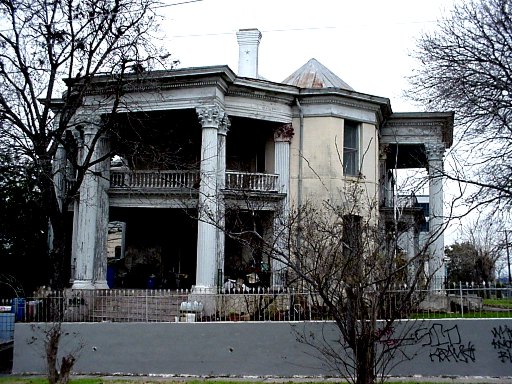
THE CRACK HOUSE 1/20/01 What do you picture when someone says "crack house?" Is it a run-down apartment complex on the Lower East Side of New York? That's an image we're all familiar with from innumerable TV shows. Or is it a seedy two-family house in St. Louis? Just giving it some thought makes you realize how subjective the concept is. We all conjure up a slightly different image in our minds. We're influenced by the news media when there's a story about a raid on a local drug den. Shows like NYPD Blue and Homicide also create and reinforce stereotypes about such places and the characters that inhabit them. But in the end, we all filter the words through our own visual database. This is what's fun about making a film. You get to decide what a crack house looks like in your world. The EvenHand crack house probably won't look very much like the one you had pictured in your head, but it's no less real. That's true if I do my job well, anyway. Which brings me to the point of this. Every film creates an environment for the characters to inhabit. There's an overall look or, in the words of Stephen McCabe, a "palette." Stephen was the production designer on Julian Po, and he created a splendid palette for that film. It's not just the job of the production designer, though. The entire creative team (production designer, costume designer, location manager, cinematographer, composer and make-up artist) has to contribute to the process. And for it to work, there has to be a unified vision. That's where the director comes in. EvenHand's palette will reflect the mood and architecture of San Antonio in the specific context of the screenplay -- and my own very subjective interpretation of what I see and read. So, the building you see pictured above, in my vision of EvenHand, is undeniably in the palette. And most definitely a crack house. -
Joseph Pierson
Next: LET IT BE Copyright © 2001 Cypress Films, Inc. All rights reserved. |